Monitoring
Booth monitoring and why you keep turning it up
The booth-level spiral is a predictable acoustic problem with a predictable solution, and almost nobody applies it.
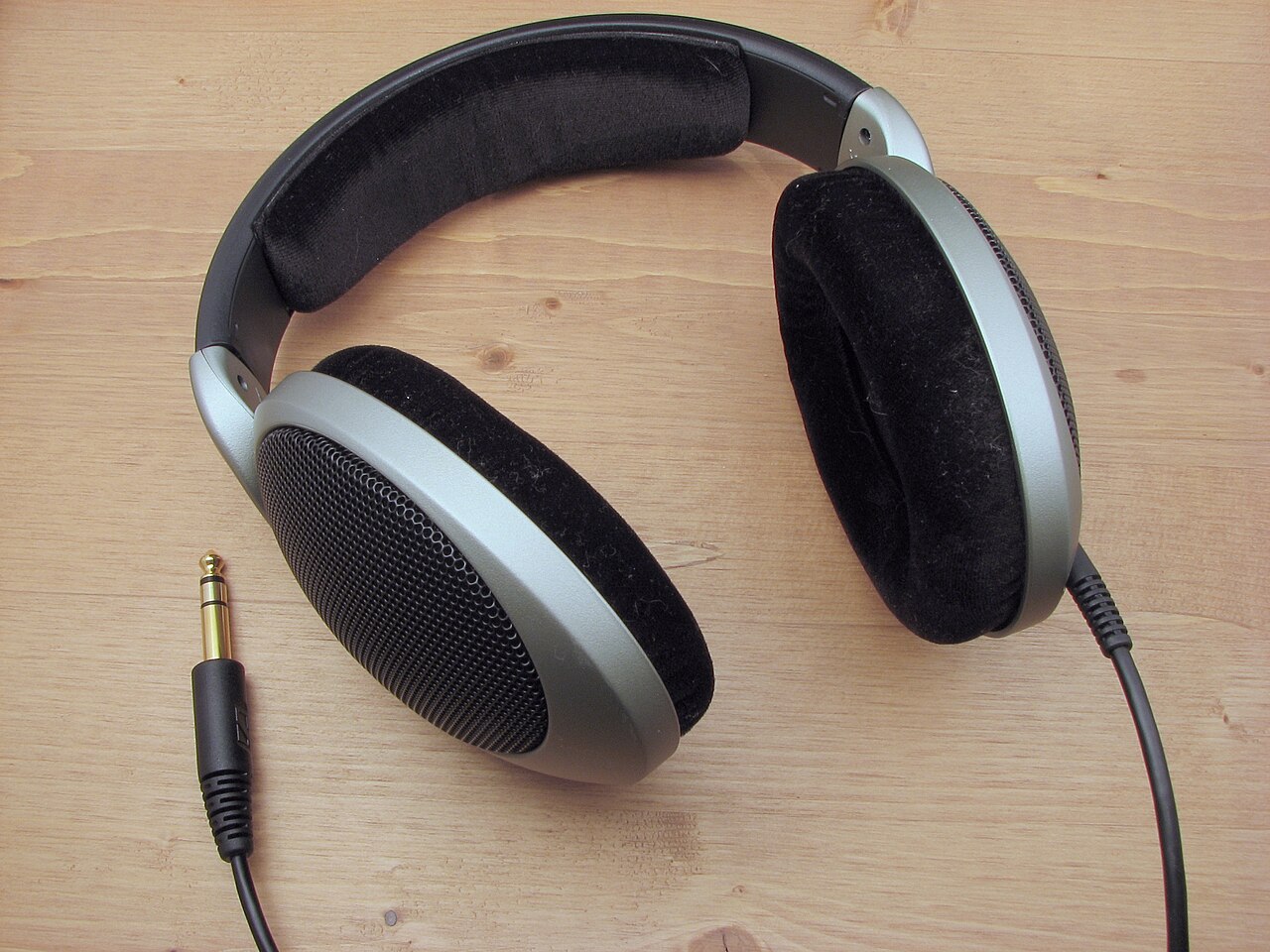

The spiral
Three effects compound over a night. The room is loud, so the monitor must exceed it to be intelligible. Your ears fatigue and temporary threshold shift sets in, so the same monitor level sounds quieter and you raise it. And the crowd gets louder as the night goes on, restarting the cycle from a higher floor.
None of this is a discipline failure. It is masking plus threshold shift, both entirely predictable — which means both can be designed around instead of endured.
What breaks it
- Position the monitor close and aimed at your head. Level falls with distance; a near monitor at low level beats a distant one at high level.
- Isolate rather than amplify. Attenuating the room with plugs or in-ears lowers what the monitor has to compete with — see hearing protection.
- Set the level before the room fills, then resist raising it. Write it down if the booth has a numbered control.
- Use one headphone cup, not two. Cueing with both ears sealed removes your reference to the room and pushes booth level up.
- Measure once. A phone SPL meter in the booth at peak tells you whether you are in a defensible range or three times over it.
Frequency response and what "good" means
Research on frequency response manipulations and musical sound quality [3] and on the perceived sound quality dimensions that follow from response [5] shows that response shape drives perception in structured, measurable ways — not arbitrarily. Work on frequency-place mismatch [2] adds a further dimension relevant to headphone and in-ear reproduction.
For monitoring, the practical implication is that a bass-heavy monitor is not merely a taste difference. It masks midrange, which is where you make mix decisions, which sends the level up again. A flatter monitor at a lower level is more useful than a coloured one turned up.
Frequency response and perceived quality
Common questions
How loud should the booth be?
Are open-back headphones better for DJing?
Should I mix on in-ears?
Why does everything sound worse late in a set?

Related reading
References
Every citation below links to the original peer-reviewed record on PubMed or via DOI. Nothing here is a substitute for medical advice.
-
Does Perceived Green Space Quality Matter? Linking Norwegian Adult Perspectives on Perceived Quality to Motivation and Frequency of Visits Fongar C, Aamodt G, Randrup T, et al. · International Journal of Environmental Research and Public Health · 2019 · Journal article DOI
-
The impact of headphone choice on perceived externalization Faber E, O'Modhrain S · The Journal of the Acoustical Society of America · 2026 · Journal article DOI
-
The importance of frequency–place mismatch in the quality of sound perceived in single-sided deafness among cochlear implant recipients Gersdorff G, Ivanovic N, Zoka Assadi M, et al. · Frontiers in Audiology and Otology · 2025 · Journal article DOI
-
Effect of Frequency Response Manipulations on Musical Sound Quality for Cochlear Implant Users Mo J, Jiam N, Deroche M, et al. · Trends in Hearing · 2022 · Journal article DOI
-
Waveform Quality Evaluation Method of Variable-Frequency Current Based on Curve Fitting Zhao S, Liu Y · Energies · 2022 · Journal article DOI
-
Perceived Sound Quality Dimensions Influencing Frequency-Gain Shaping Preferences for Hearing Aid-Amplified Speech and Music Vaisberg J, Beaulac S, Glista D, et al. · Trends in Hearing · 2021 · Journal article DOI
-
The perception and measurement of headphone sound quality Olive S, Welti T, Khonsariopour O · The Journal of the Acoustical Society of America · 2019 · Journal article DOI
-
the THE INFLUENCE OF PERCEIVED PRODUCT QUALITY AND PERCEIVED SERVICE QUALITY TOWARD CUSTOMER VALUE, BEHAVIOR INTENTION AND CUSTOMER RESPONSE RESIDENTIAL AREA IN SOUTH KALIMANTAN PROVINCE sutrisno . · Archives of Business Research · 2019 · Journal article DOI
-
Perceived Target Range Shapes Human Sound-Localization Behavior Ege R, Van Opstal A, Van Wanrooij M · eneuro · 2019 · Journal article DOI
-
No correlation between headphone frequency response and retail price Breebaart J · The Journal of the Acoustical Society of America · 2017 · Journal article DOI
-
Subjective Evaluation of Three Headphone-Based Virtual Sound Source Positioning Methods Including Differential Head-Related Transfer Function Storek D, Rund F, Marsalek P · Archives of Acoustics · 2016 · Journal article DOI
-
Preferred and minimum acceptable listening levels for musicians while using floor and in-ear monitors Federman J, Ricketts T · Journal of speech, language, and hearing research : JSLHR · 2008 · Journal article DOIPubMed 18230862